_edited.png)
Alabama Congressional Candidate Clyde Jones Discusses Healthcare, Immigration, and Political Accountability
A candidate for Congress in one of Alabama's most conservative districts is calling for changes to healthcare policy, immigration enforcement, and the role of money in politics.
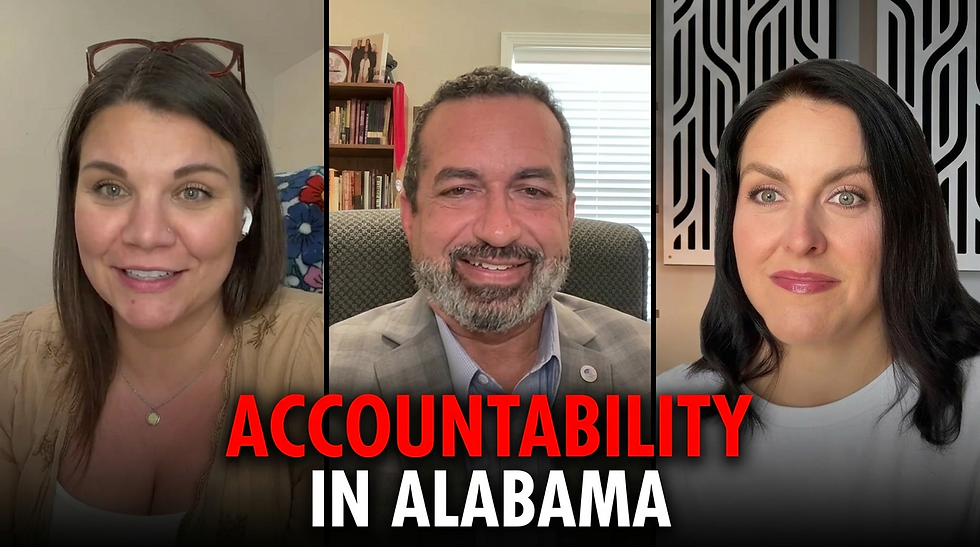
In a recent episode of Make It Make Sense, Alabama, hosts Neeli Faulkner and Whitney Scapecchi sat down with Clyde Jones, a Democratic candidate for Alabama's 1st Congressional District, to discuss the issues he says are most impacting residents across South Alabama.
Jones, a retired U.S. Army First Sergeant and Bronze Star recipient, is running in a district that has historically leaned Republican. During the interview, he acknowledged the political landscape but emphasized what he described as a broader frustration among voters.
Key Issues for Clyde Jones: Healthcare, Wages, and Immigration
When asked to identify the most pressing concerns in the district, Jones pointed to healthcare, workers' rights, and immigration reform.
He warned that changes at the federal level could place additional financial strain on states like Alabama, particularly in healthcare funding.
Jones also raised concerns about wage gaps in Baldwin County, noting that the cost of living has outpaced earnings for many residents. He cited estimates suggesting a single adult would need to earn significantly more than the current federal minimum wage to afford basic living expenses in the area.
On immigration, Jones criticized current enforcement practices, particularly the use of arrest quotas, which he said can result in individuals being detained despite having legal authorization to work.
Campaign Finance and Accountability
Jones also addressed the influence of corporate money in political campaigns, arguing that large donations often come with expectations.
He voiced support for measures such as congressional term limits, restrictions on stock trading by elected officials, and overturning the Supreme Court's decision in Citizens United v. FEC, which allows for increased corporate spending in elections.
Jones is part of a coalition of candidates advocating for these reforms, including stricter lobbying regulations and the establishment of a formal code of conduct for the U.S. Supreme Court.
Listen to the Full Interview Now
Listen to the full interview on Spotify, or wherever you listen to podcasts.
Links to listen on other platforms including Apple Podcasts, YouTube, and more can be found here.
Episode Resources
Candidate Information
Candidate Website: https://clydeforcongress.com/
Candidate direct donation link: https://secure.actblue.com/donate/clyde-jones-al
Clyde Jones for Congress on Facebook: https://www.facebook.com/ClydeJonesForCongress
Clyde Jones for Congress on Instagram: https://www.instagram.com/clydejonesforcongress
Clyde Jones for Congress on TikTok: https://www.tiktok.com/@clydeforcongress
Government and Policy
Alabama Arise: https://alarise.org
Nonprofit organization focused on public policy, healthcare, and economic issues in Alabama
U.S. Department of Health and Human Services: https://www.hhs.gov
Federal agency overseeing healthcare policy, funding, and programs
Centers for Medicare and Medicaid Services: https://www.cms.gov
Information on Medicaid, Medicare, and federal healthcare funding changes
U.S. Department of Labor: https://www.dol.gov
Federal labor laws, wage standards, and works' rights information
Campaign Finance and Government Accountability
Federal Election Commission: https://www.fec.gov
Campaign finance data, contribution tracking, and election regulations
OpenSecrets: https://www.opensecrets.org
Tracks money in U.S. politics, including corporate donations and lobbying
Citizens United v. FEC: https://www.oyez.org/cases/2008/08-205
Landmark Supreme Court case impacting corporate political spending
Immigration Policy
U.S. Department of Homeland Security: https://www.dhs.gov
Immigration enforcement policies and federal oversight
U.S. Citizenship and Immigration Services: https://www.uscis.gov
Immigration processes, work authorization, and pathways to citizenship


Comments